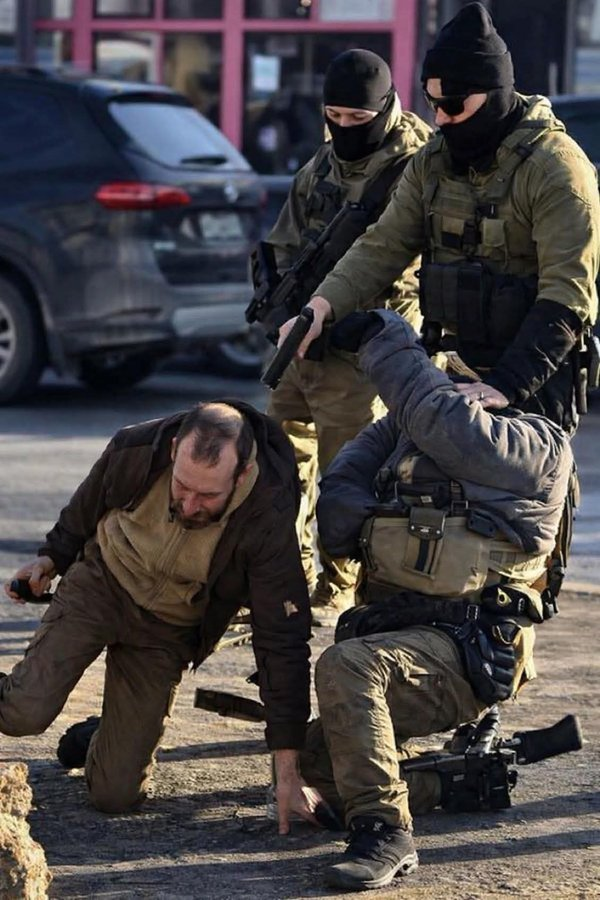
U.S. Immigration and Customs Enforcement (ICE) at work
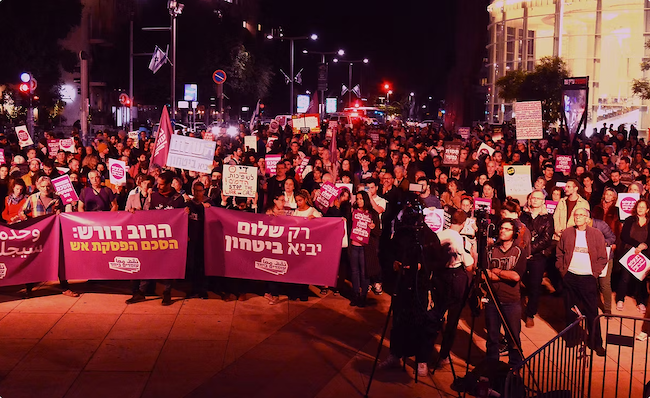
Standing Together!
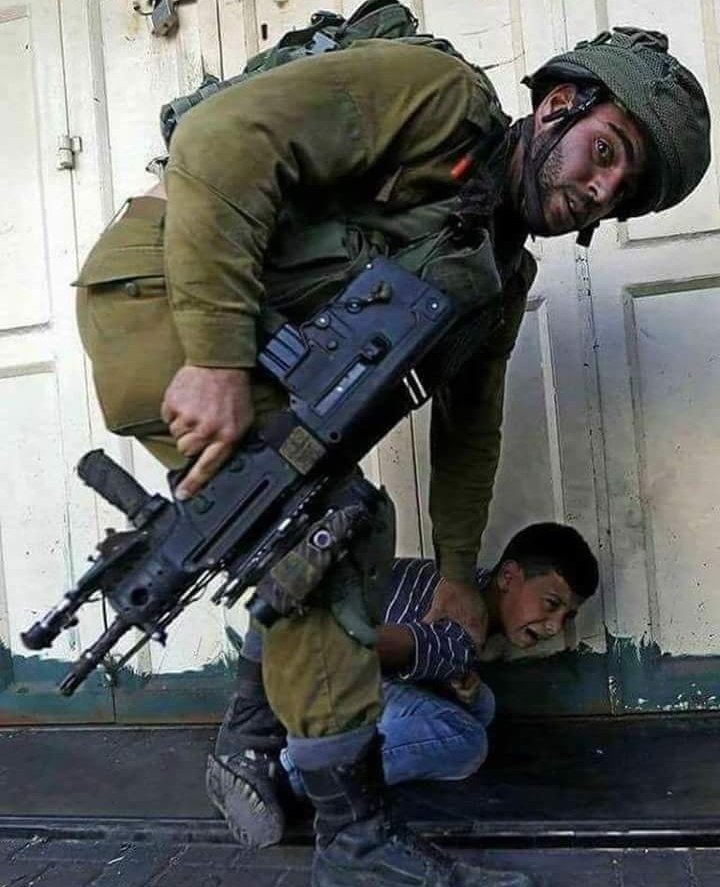
Israeli Defense Forces (IDF) at work
From ICE Raids to the West Bank
by Charlotte Ritz-Jack, Editorial Fellow
The Landline Newsletter, +972Mag
January 30, 2026
When I moved to Jerusalem in August, joining Signal groups to coordinate my first shifts of protective presence (the practice of standing with Palestinian communities in hopes of deterring Israeli state and settler violence), I felt intimidated. I had been to Israel and the occupied West Bank only once before, do not speak Hebrew, and was following reports of escalating state-backed settler attacks. Soon, I would be getting in strangers’ cars to drive to small villages whose names I was learning for the first time.
But in other ways, the experience felt oddly familiar. In the months beforehand, U.S. Immigration and Customs Enforcement (ICE) had intruded on my home city. Armed agents began consistently patrolling the streets my neighbors used to feel safe walking, twice visiting the building in uptown Manhattan I grew up in. I joined the swell of angry New Yorkers organizing shifts to block ICE from entering private property — where they are not allowed without a warrant or consent — and, when that failed, to alert residents and document any interactions.
In the West Bank, I saw that these were well-established tactics. For at least the last 25 years, Israelis and internationals have been traveling to Palestinian communities to accompany residents, sleeping, eating, and often living alongside them. The practice rests on the grim fact that with foreign passports or Israeli citizenship, settlers and state forces have long treated these activists with more dignity than those of Palestinian residents.
Yet even this is no longer always true: Many Israeli and international activists have themselves become victims of the state-sanctioned violence they try to curb. Indeed, ICE’s latest horrific actions — killing Alex Pretti and Renee Good, detaining a five-year-old child, making a woman faint after pressing a knee to her neck, arresting citizens without warrants — mirror forms of violence that Palestinians in the West Bank and Israel have been subjected to for decades.
The similarities are no coincidence. U.S. and Israeli law enforcement have long exchanged methods and technologies: ICE is using Israeli spyware developed by veterans of Unit 8200; both the Israeli army and ICE rely on Palantir’s AI tracking systems; and some ICE agents may even be sent to Israel to train. These tools reinforce the United States’ already well-established over-policing, neglect, and discrimination of minorities.
Activists standing against ICE and Israel’s occupation will likely increasingly be beaten, broken, and humiliated alongside those they seek to protect. In the West Bank, their presence can no longer shield Palestinians from the settler beatings, theft, and arson that lead to their forced displacement. This begs the question: What does showing up even do? From what I’ve gathered, a lot.
Over the past few weeks, I’ve been asking activists running solidarity organizations and experts working here on the ground in Israel-Palestine exactly this question. They say that while protective presence has lost much of its capacity to de-escalate, it continues to serve as a crucial means of documentation that later justice processes will hopefully rely on. And in the present, it can still somewhat slow Israel’s process of ethnic cleansing by providing solidarity, a crucial psychological comfort, that encourages Palestinian communities to stay on their land.
Moreover, partnership, as a value, is strengthened, forging relationships that contradict and oppose the logics this violence thrives on. One activist recently described Israel’s apartheid policies as a “two-way street” that shrinks the political imagination of both Palestinians and Israelis, and protective presence as eroding that forced separation.
Elements of the situation in Israel-Palestine and the United States increasingly resemble each other — or, perhaps, they resemble a more universal, centuries-old fascist playbook to violently police the body. As people across the U.S. sign up for shifts, take to the streets, and express their outrage in myriad ways despite the fatal risks, those who have spent decades traveling to and from the West Bank — and the Palestinians who request their presence — testify that these actions still matter, both in slowing the worsening of conditions, and in the long-term struggle for accountability.
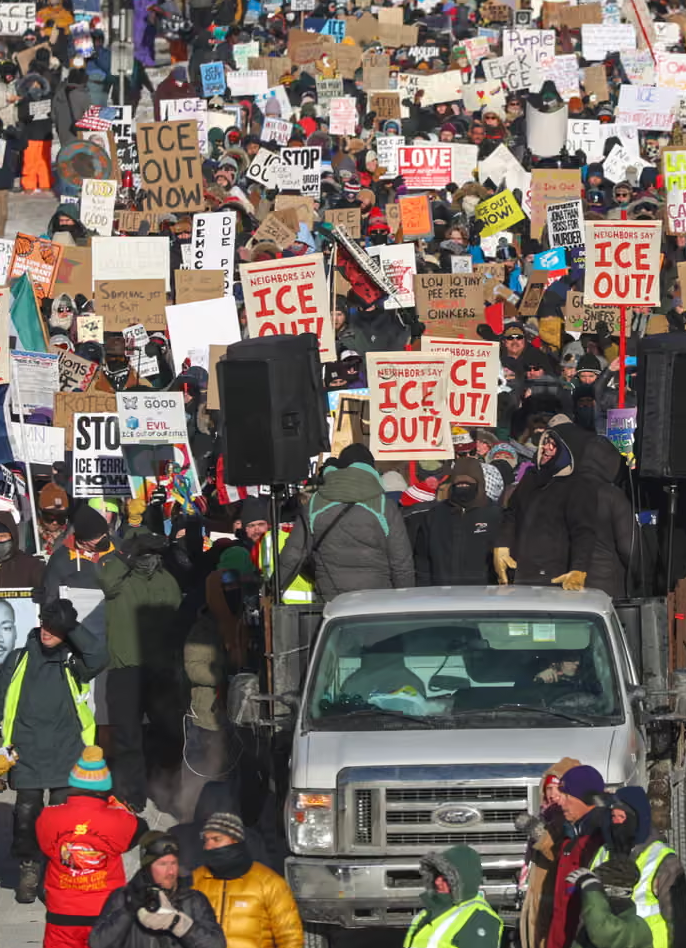
ICE out!