Palestinian nonviolent resistance has a continuous documented history spanning a century.
British Mandate era (1920’s-1930’s)
1920’s-early 1930’s: Palestinians organized protests, demonstrations, and processions against the growth of Jewish immigration (primarily from Europe) under the Balfour Declaration, with the British mandatory government cracking down swiftly. A notable moment was the 1933 beating of notable Must Kazim al-Husseini by mounted British police during a protest. Foreign Policy
1936 general strike: Starting in April 1936, Palestinian national committees called a general strike, tax withholding, and a boycott of Jewish products to protest British colonialism and Jewish immigration, coordinated nationally by the newly formed Arab Higher Committee, chaired by Haj Amin al-Husseini. It’s often cited as one of the longest sustain general strikes in modern history – six months. Importantly, this strike eventually gave way to the armed “Arab Revolt” of 1936-39: What began as civil, unarmed non-cooperation escalated into armed insurgency as it confronted violent suppression by British forces. Middle East Eye +
1948 and pre-1987
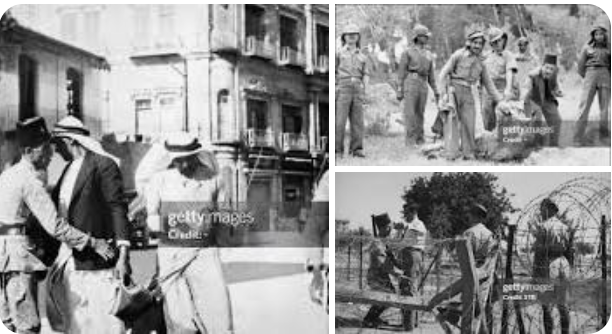
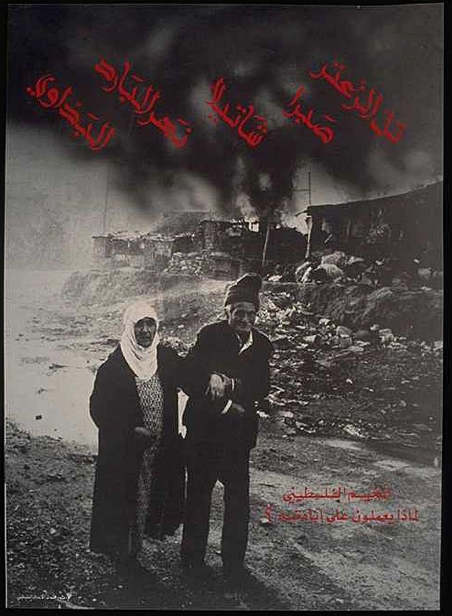
Nonviolent action was less prominent during this period as Palestinian politics were dominated first by the 1948 Nakbah and later by the rise of armed factions (Fatah, PFLP, and others) operating from exile after 1967.
Scattered grassroots activity continued inside the newly occupied West Bank and Gaza after the 1967 war, including early strikes, petitions, and flag displays, laying the groundwork for later mass organizing.
First Intifada (1987–1993)
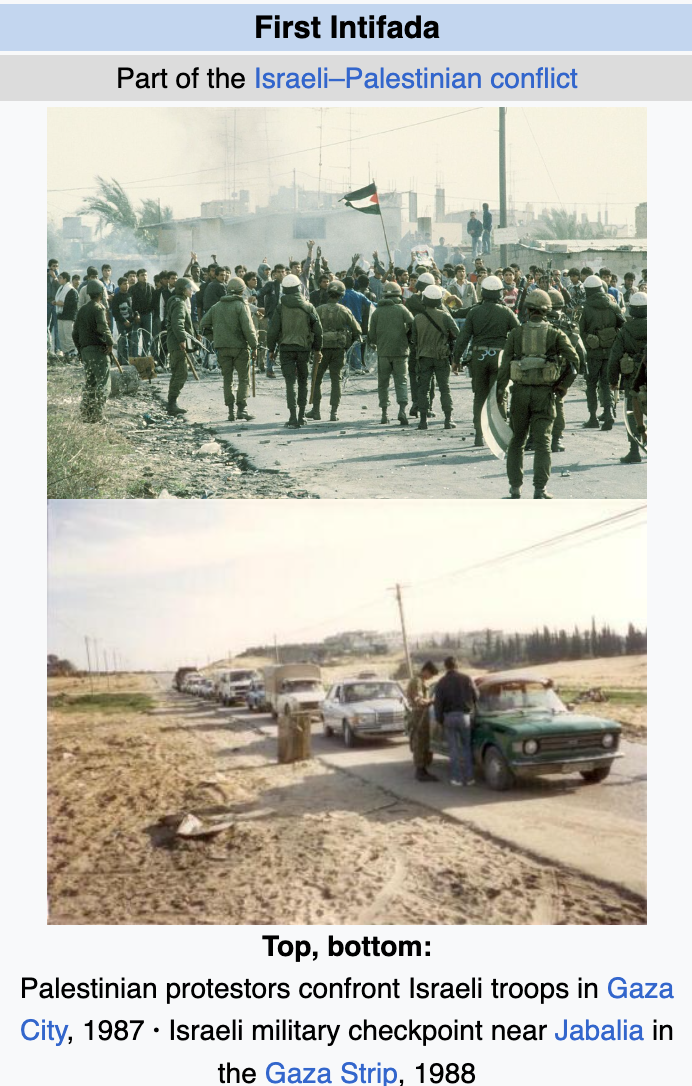
This is generally considered the high-water mark of organized Palestinian nonviolent resistance:
Led by the clandestine Unified National Leadership of the Uprising (UNLU), a coalition of grassroots factions, unions, and student and women’s groups that issued communiques every two weeks describing coordinated actions Palestinians should take. Wikipedia
Tactics included labor strikes, tax strikes, boycotts of Israeli goods and institutions, mass demonstrations, underground classrooms and cooperatives, raising the banned Palestinian flag, and general civil disobedience. Wikipedia
The Beit Sahour tax strike (1989) is the best-documented single episode: residents of the West Bank town refused to pay taxes to the Israeli Civil Administration under the slogan “no taxation without representation”, prompting Israeli seizure of property, administrative detention of residents, and a 42-day military blockade of the town. Wikipedia
Some Israeli reservists and peace activists supported the uprising from the other side: more than 500 Israeli reservists signed a petition in 1988 refusing to serve in the occupied territories, and the Israeli group, Peace Now, mobilized thousands demanding a negotiated resolution. In These Times
Village-based resistance to the separation barrier (early 2000s – present)
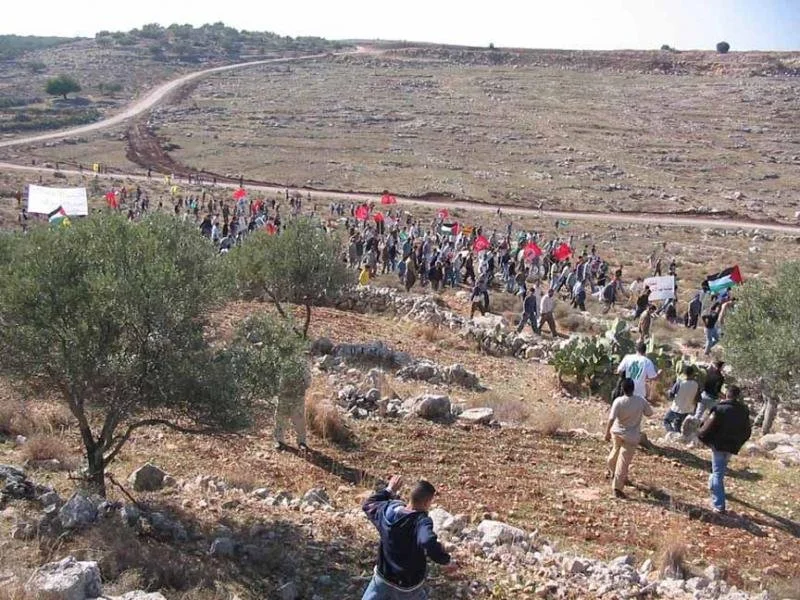
After Israel began building the West Bank separation barrier in the early 2000s, several villages organized sustain local campaigns:
Budrus (2003-2004): Villagers led by Ayed Mortar mounted a nonviolent campaign against the barrier’s route through village olive groves; this is widely cited as the only clear “success story,” as protests eventually forced the Israeli army to redraw the barrier’s path and restore appropriated land. (Documented in the 2009 film, Budrus.) Wikipedia
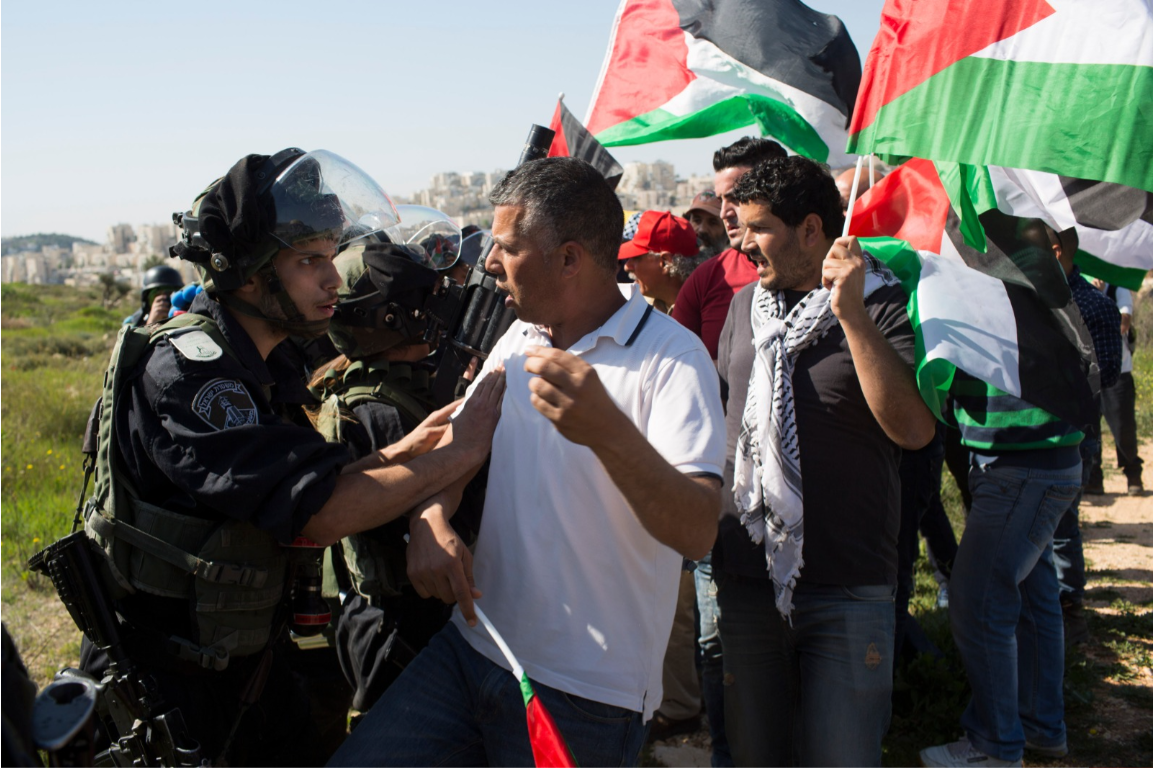
Bil’in (2005–): The village became known for weekly Friday marches and creative tactics – protesters tying themselves to olive trees being uprooted, locking themselves in cages hauled away by cranes, chaining themselves to steel pillars. Israel’s Supreme Court ruled partly in the village’s favor in 2007, though the Wall’s construction still ultimately cost the village a third of its land, at a price of many wound and two protesters killed. (Documented in the Oscar-nominated film, Five Broken Cameras.) Open Democracy
Nabil Saleh (2009 – ): Weekly protests began December 9, 2009, over the takeover of a village spring by the illegal Israeli settlement of Halamish (also known as Neveh Tzuf). Oaklandinstitute
These village campaigns were coordinated through a decentralized network of local popular committees under the umbrella Popular Committee Against the Wall and Settlements, representing a dozen or more villages. StopTheWall is among the organizations that continue their work.
Boycott, Divestment, and Sanctions (BDS) – 2005–present
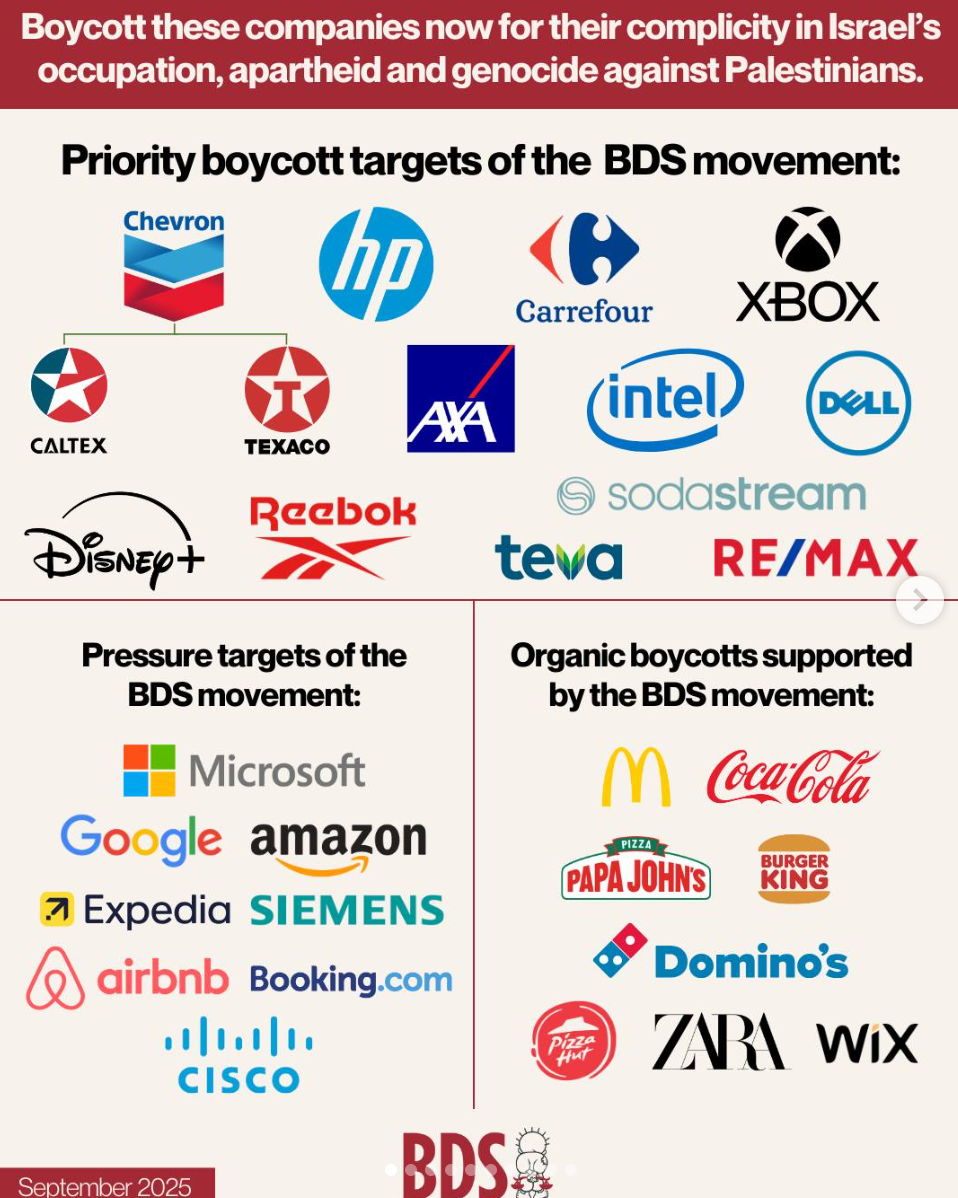
Launched in July 2005 by a coalition of more than 170 Palestinian unions, professional associations, refugee networks, women’s associations, and other civil society bodies, this campaign explicitly models itself on the anti-apartheid boycott of South Africa. Its demands are recognition of the rights of Palestinians citizens of Israel, the right of return for refugees, and Israeli withdrawal from land occupied in 1967. Wikipedia
Great March of Return (Gaza, 2018 – 2019)
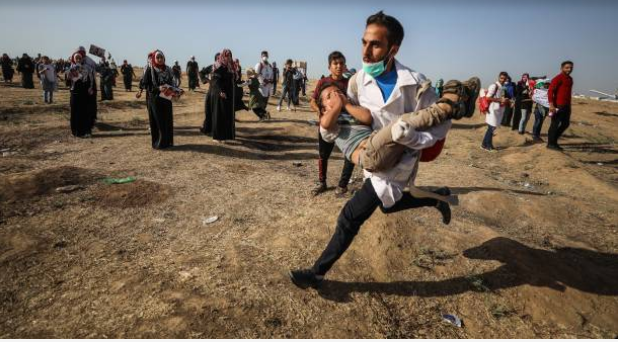
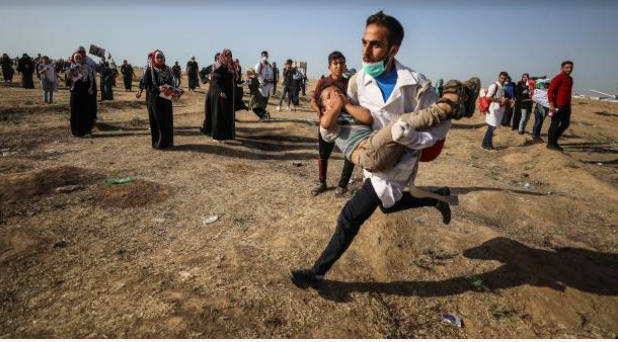
Weekly protests at the Gaza-Israeli barrier fence began March 30, 2018, prompted by a Facebook call from journalist Ahmed Abu Artema for refugees to gather peacefully near the fence, demanding the right of return and an end to Israel’s blockade of Gaza. Over roughly a year, the UN Commission of Inquiry found Israeli snipers shot over 6,100 demonstrators, killing 18, between march and December 2018 along, and by the one-year mark 195 Palestinians including 41 children had been killed and nearly 29,000 injured. Al Jazeera
Meet the Followers of Martin Luther King Jr. in the West Bank
NYT, July. 6, 2024
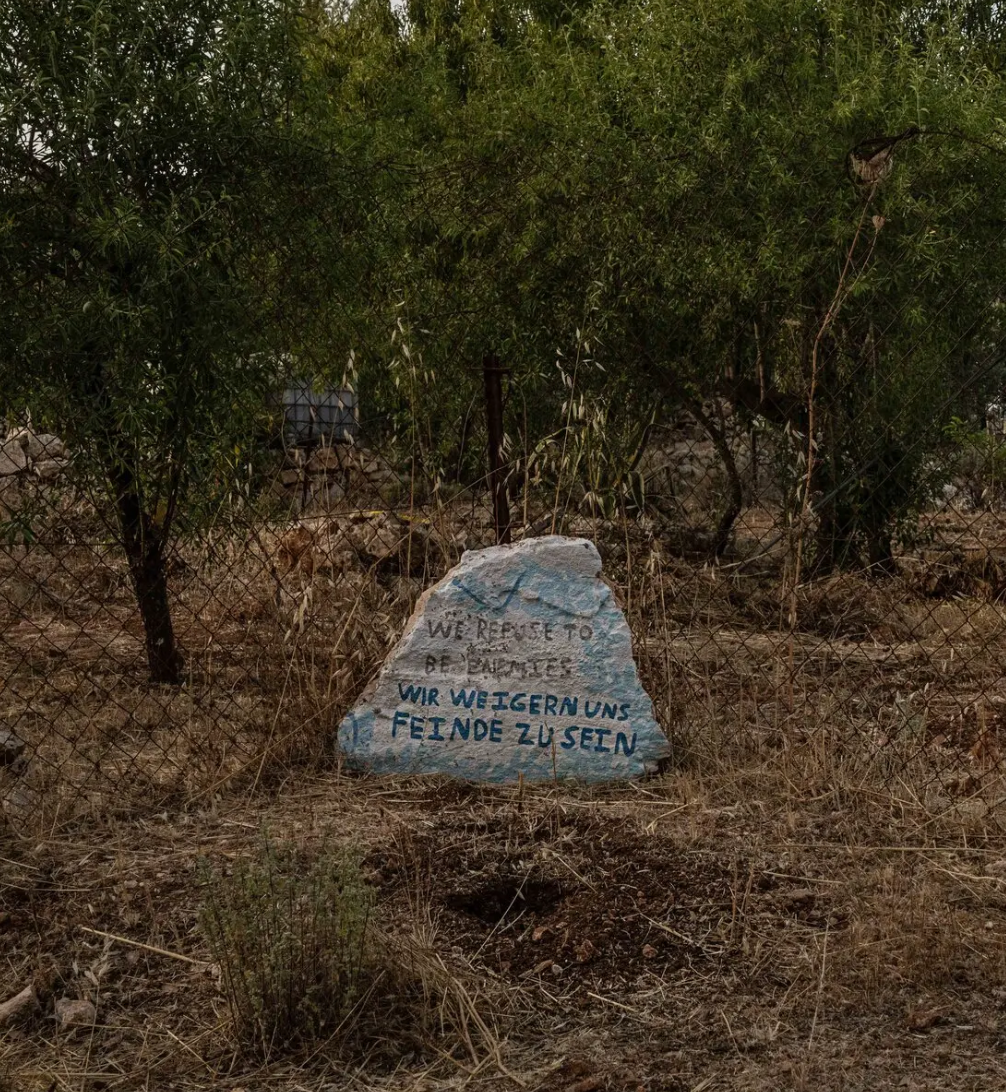
A sign at the entrance to the Nassar family farm reads: “We refuse to be enemies.”
In a land torn apart by conflict, hatred and violence, this farm is an oasis of peace. Called the Tent of Nations, it is a monument to the idea that Arabs and Jews can live together in harmony.
The Nassars, a Christian Palestinian family, hold children’s camps and other programs on the farm to promote understanding and nonviolence even as they struggle to save their land from confiscation by Israeli settlers. They quote Martin Luther King Jr. and provide a model of peacefulness for their Palestinian and Israeli neighbors alike.
“It’s very important for us to show that nonviolent resistance is the key to change,” said Daoud Nassar, who runs the farm with his siblings Amal and Daher and other family members. “With violence, people willachieve more violence, will achieve more hatred, will achieve more bitterness and more enemies.” – Nicolas Kristof, NYT, July 6, 2024. Continue reading here.
‘The goal is to shatter the symbol that Bil’in has become’
2005 – present
Oren Ziv, 972Mag
September 2, 2026
In the early 2000s, the West Bank village of Bil’in became a focal point of the Palestinian popular struggle against the separation barrier — the roughly 400-kilometer system of fences and concrete walls that Israel began erecting in 2002, during the Second Intifada, ostensibly to prevent Palestinian attacks. In Bil’in, the barrier’s construction cut residents off from most of the village’s agricultural land. …
Now, +972 Magazine and Local Call can report for the first time that Bil’in residents may once again be forced to struggle over the same land. Continue reading here.
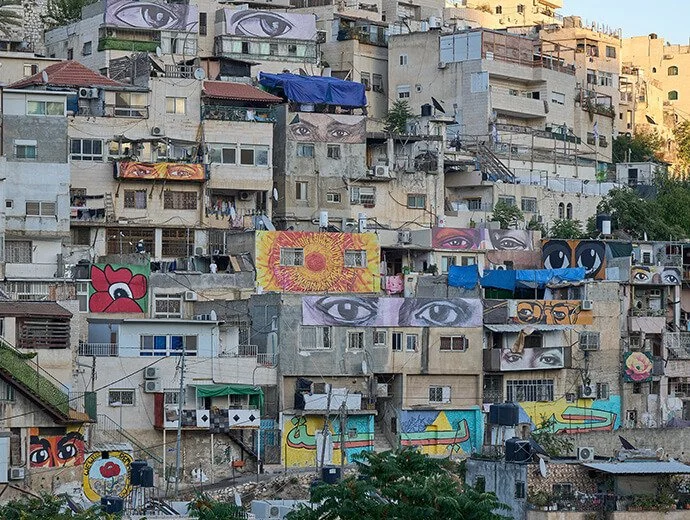
I Witness Silwan
2015 – present
- Jawad Siyam, Director of Madaa-Silwan Creative Center